Anzeige
Fauna Marin GmbH Mrutzek Meeresaquaristik Aqua Medic Fauna Marin GmbH ICP

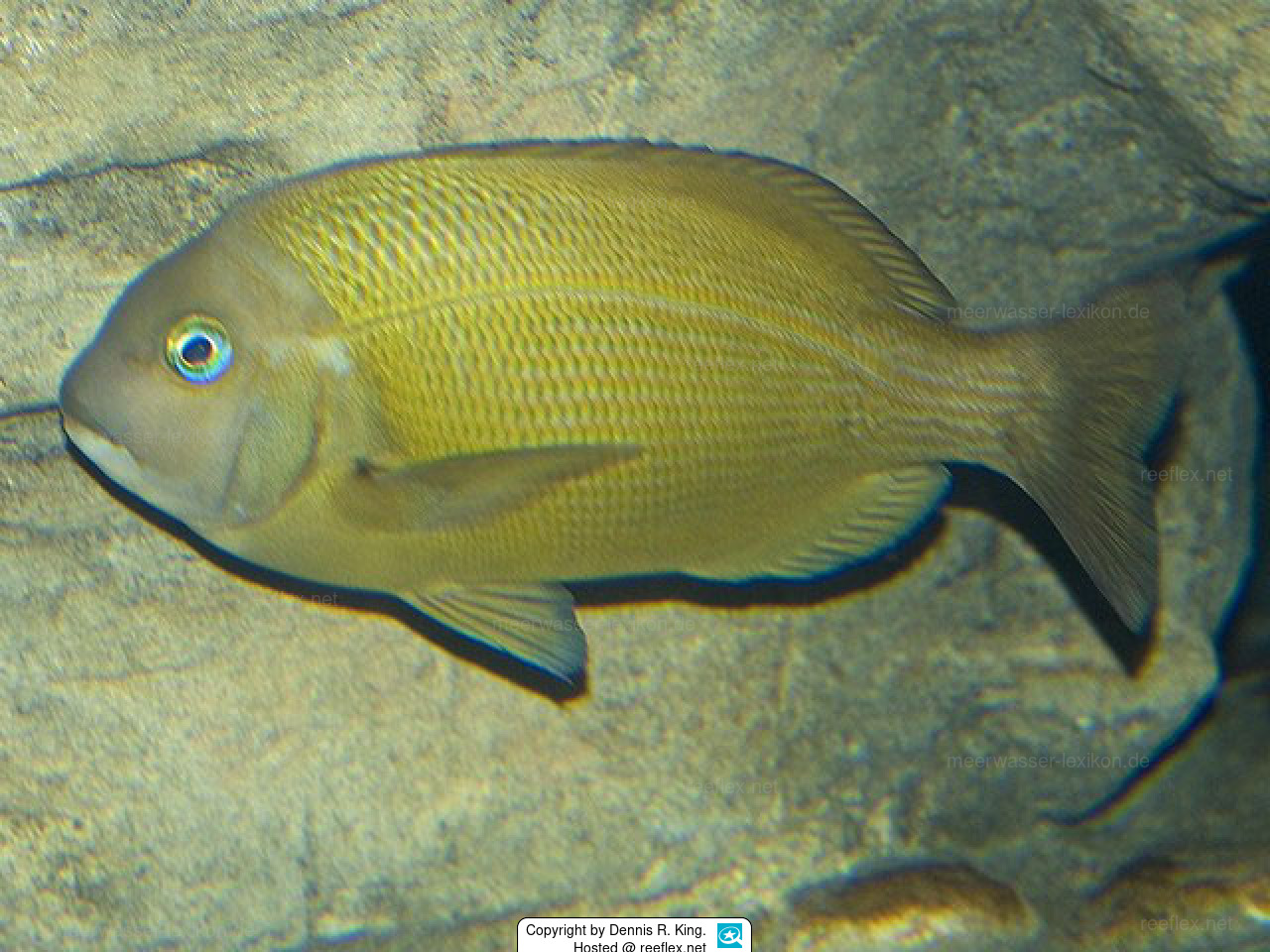
Gymnocrotaphus curvidens Janbruin

Gymnocrotaphus curvidens is commonly referred to as Janbruin. Difficulty in the aquarium: Not suitable for home aquaria!. Toxicity: Toxic hazard unknown.


Profilbild Urheber Dr. Dennis R. King, Südafrika

Copyright Dennis R. King


Courtesy of the author Dr. Dennis R. King, Südafrika Copyright Dennis R. King

Uploaded by AndiV.

Image detail


Profile

lexID:
9107 
AphiaID:
218603 
Scientific:
Gymnocrotaphus curvidens 
German:
Meeresbrasse 
English:
Janbruin 
Category:
 
Family tree:
Animalia (Kingdom) > Chordata (Phylum) > Actinopterygii (Class) > Perciformes (Order) > Sparidae (Family) > Gymnocrotaphus (Genus) > curvidens (Species) 
Initial determination:
Günther, 1859 
Occurrence:
KwaZulu-Natal (Province East Coast South Africa), South-Africa, Southeast Atlantic, Southwestern Indian Ocean 
Marine Zone:
Subtidal, sublittoral, infralittoral, deep zone of the oceans from the lower limit of the intertidal zone (intertidal) to the shelf edge at about 200 m water depth. neritic. 
Sea depth:
1 - 80 Meter 
Habitats:
Mesophotic reefs (40 -150 meters), Rocky reefs, Shallow reefs, Tidal channels, Intertidal channels, Tide pools / rock pools 
Size:
up to 19.69" (50 cm) 
Weight:
3.7 kg 
Temperature:
64.4 °F - 81.5 °F (18°C - 27.5°C) 
Food:
Algae (Algivore), Amphipods, Bryozoans (sea mats), Copepods, Crustaceans, Daphnia salina, Echinoderm larvae, Invertebrates, Kelp, Seaweed, Mysis, Schrimps, Small Sharks, Zooplankton 
Difficulty:
Not suitable for home aquaria! 
Offspring:
Not available as offspring 
Toxicity:
Toxic hazard unknown 
CITES:
Not evaluated 
Red List:
Least concern (LC)  
Related species at
Catalog of Life
:
 
Author:
Publisher:
Meerwasser-Lexikon.de
Created:
Last edit:
2026-04-09 17:02:16 

Info

The Gymnocrotaphus curvidens is a highly site-faithful and endemic species found around both tips of South Africa, from KwaZulu-Natal to the south-eastern part of the country.

The sea bream prefers shallow reef areas, although adult fish are known to be found at depths of up to 50–80 metres (P. Cowley, South African Institute for Aquatic Biodiversity, unpublished data; van der Elst 1993; Heemstra and Heemstra 2004; A. Wood, Gleneagles Environmental Consulting, pers.
observation).

Juvenile sea bream are quite common in tidal channels (Beckley and Buxton 1989).

This species feeds on fish, seaweed, bryozoans, polychaetes and small crustaceans (van der Elst 1993).
Little is known about the biology of Gymnocrotaphus curvidens, but hermaphroditism may occur.

External links

  1. FishBase (multi). Abgerufen am 07.08.2020.
  2. IUCN Red List of Threatened Species (multi). Abgerufen am 09.04.2026.

Pictures

Commonly


Husbandry know-how of owners

0 husbandary tips from our users available
Show all and discuss