

 Dietmar Schauer


Info
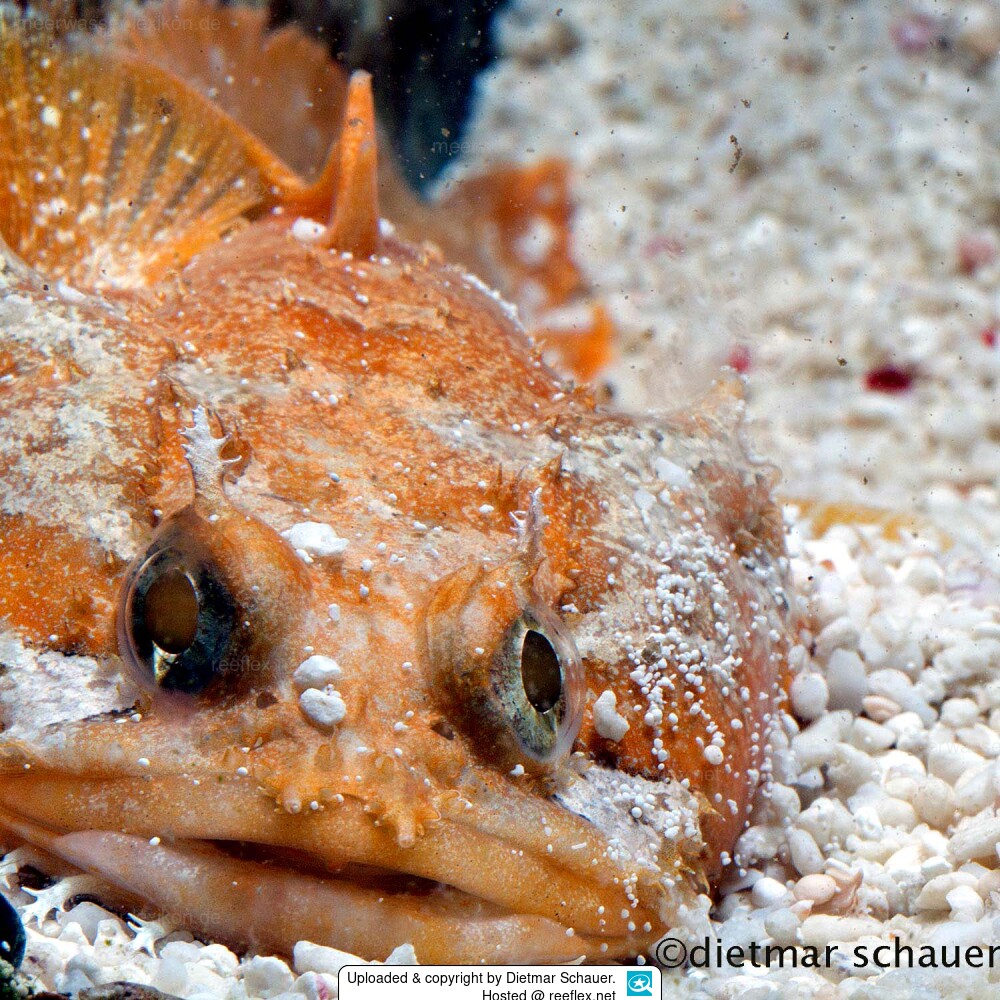
Opsanus beta (Goode & Bean, 1880)
Color: Dark brown stripes on the caudal and pectoral fins; the stripes on the pectoral fin are irregularly connected.
The Gulf toadfish is commonly found in seagrass beds and rock crevices in coastal bays and lagoons, as well as in shallow areas along the coast. On the west coast of Florida, adults spawn in February and March. Males produce grunting sounds, known as “boat whistles,” to signal competition among males and attract females. Neither the gill covers nor the dorsal gland are poisonous.
Diet: The prey of this voracious predator includes small fish such as gobies, crustaceans (shrimp and crabs), and mollusks.
Predators include barracudas and dolphins.
According to WoRMS, Opsanus beta is a host to numerous endoparasites.
FishBase states: Reports of ciguatera poisoning!
Consuming this animal can trigger the dreaded Ciguatera fish poisoning.
The cause is to be found in certain unicellular organisms (dinoflagellates, such as Gambierdiscus toxicus), which produce toxins in the body of harmless and otherwise well-tolerated food fish, which can lead to various symptoms in humans:
Initial symptoms: Sweating, numbness and burning, especially around the mouth.
This is followed later by chills, dizziness, nausea, vomiting, diarrhoea, abdominal pain and muscle cramps. Paresthesia (itching, tingling, numbness) on the lips, the mucous membrane of the mouth and especially on the palms of the hands and soles of the feet, numbness in the hands, feet and face.
Paralysis of the skeletal muscles, including the respiratory muscles, dizziness and coordination disorders may occur. Muscle pain, joint pain, headache, toothache, shivering and sweating are further symptoms. A general feeling of weakness develops. Consumption of alcohol aggravates the symptoms.
Less common are life-threatening drops in blood pressure and palpitations (tachycardia) or the opposite. Overall, the condition is very rare, but it leads to death in about 7% of cases.
Attention: An antidote does not exist!
First aid:
As early as possible: Pump out the stomach, if vomiting does not occur by itself
Activated carbon (medical carbon) give to bind the toxins: dosage is 1 g / kg body weight.
Promote excretion: As an acute therapy, the attending physician can give an infusion of 20% mannitol (sugar alcohol). The mechanism of action is unclear. Mannitol promotes urine excretion, so this measure should only be taken after fluid and electrolytes have been supplemented to prevent a circulatory collapse.
Rehydration with fluid and electrolytes is a sensible measure anyway, especially after vomiting and diarrhoea.
In life-threatening situations, plasma expanders should be given, i.e. infusions that increase the volume of the blood and remain in the circulation for a long time.
Cardiovascular symptoms may require further medical intervention: Atropine can be given if the heartbeat slows down, dopamine if the blood pressure drops.
You can find more information here:
http://www.dr-bernhard-peter.de/Apotheke/seite116.htm
Synonymised names
Batrachus tau beta Goode & Bean, 1880 · unaccepted
Opsanus brasiliensis Rotundo, Spinelli & Zavala-Camin, 2005 · unaccepted (synonym)
Opsanus vandeuseni Fowler, 1939 · unaccepted
Color: Dark brown stripes on the caudal and pectoral fins; the stripes on the pectoral fin are irregularly connected.
The Gulf toadfish is commonly found in seagrass beds and rock crevices in coastal bays and lagoons, as well as in shallow areas along the coast. On the west coast of Florida, adults spawn in February and March. Males produce grunting sounds, known as “boat whistles,” to signal competition among males and attract females. Neither the gill covers nor the dorsal gland are poisonous.
Diet: The prey of this voracious predator includes small fish such as gobies, crustaceans (shrimp and crabs), and mollusks.
Predators include barracudas and dolphins.
According to WoRMS, Opsanus beta is a host to numerous endoparasites.
FishBase states: Reports of ciguatera poisoning!
Consuming this animal can trigger the dreaded Ciguatera fish poisoning.
The cause is to be found in certain unicellular organisms (dinoflagellates, such as Gambierdiscus toxicus), which produce toxins in the body of harmless and otherwise well-tolerated food fish, which can lead to various symptoms in humans:
Initial symptoms: Sweating, numbness and burning, especially around the mouth.
This is followed later by chills, dizziness, nausea, vomiting, diarrhoea, abdominal pain and muscle cramps. Paresthesia (itching, tingling, numbness) on the lips, the mucous membrane of the mouth and especially on the palms of the hands and soles of the feet, numbness in the hands, feet and face.
Paralysis of the skeletal muscles, including the respiratory muscles, dizziness and coordination disorders may occur. Muscle pain, joint pain, headache, toothache, shivering and sweating are further symptoms. A general feeling of weakness develops. Consumption of alcohol aggravates the symptoms.
Less common are life-threatening drops in blood pressure and palpitations (tachycardia) or the opposite. Overall, the condition is very rare, but it leads to death in about 7% of cases.
Attention: An antidote does not exist!
First aid:
As early as possible: Pump out the stomach, if vomiting does not occur by itself
Activated carbon (medical carbon) give to bind the toxins: dosage is 1 g / kg body weight.
Promote excretion: As an acute therapy, the attending physician can give an infusion of 20% mannitol (sugar alcohol). The mechanism of action is unclear. Mannitol promotes urine excretion, so this measure should only be taken after fluid and electrolytes have been supplemented to prevent a circulatory collapse.
Rehydration with fluid and electrolytes is a sensible measure anyway, especially after vomiting and diarrhoea.
In life-threatening situations, plasma expanders should be given, i.e. infusions that increase the volume of the blood and remain in the circulation for a long time.
Cardiovascular symptoms may require further medical intervention: Atropine can be given if the heartbeat slows down, dopamine if the blood pressure drops.
You can find more information here:
http://www.dr-bernhard-peter.de/Apotheke/seite116.htm
Synonymised names
Batrachus tau beta Goode & Bean, 1880 · unaccepted
Opsanus brasiliensis Rotundo, Spinelli & Zavala-Camin, 2005 · unaccepted (synonym)
Opsanus vandeuseni Fowler, 1939 · unaccepted


