
Anzeige
Fauna Marin GmbH aquarioom.com Fauna Marin GmbH Kölle Zoo Aquaristik Osci Motion

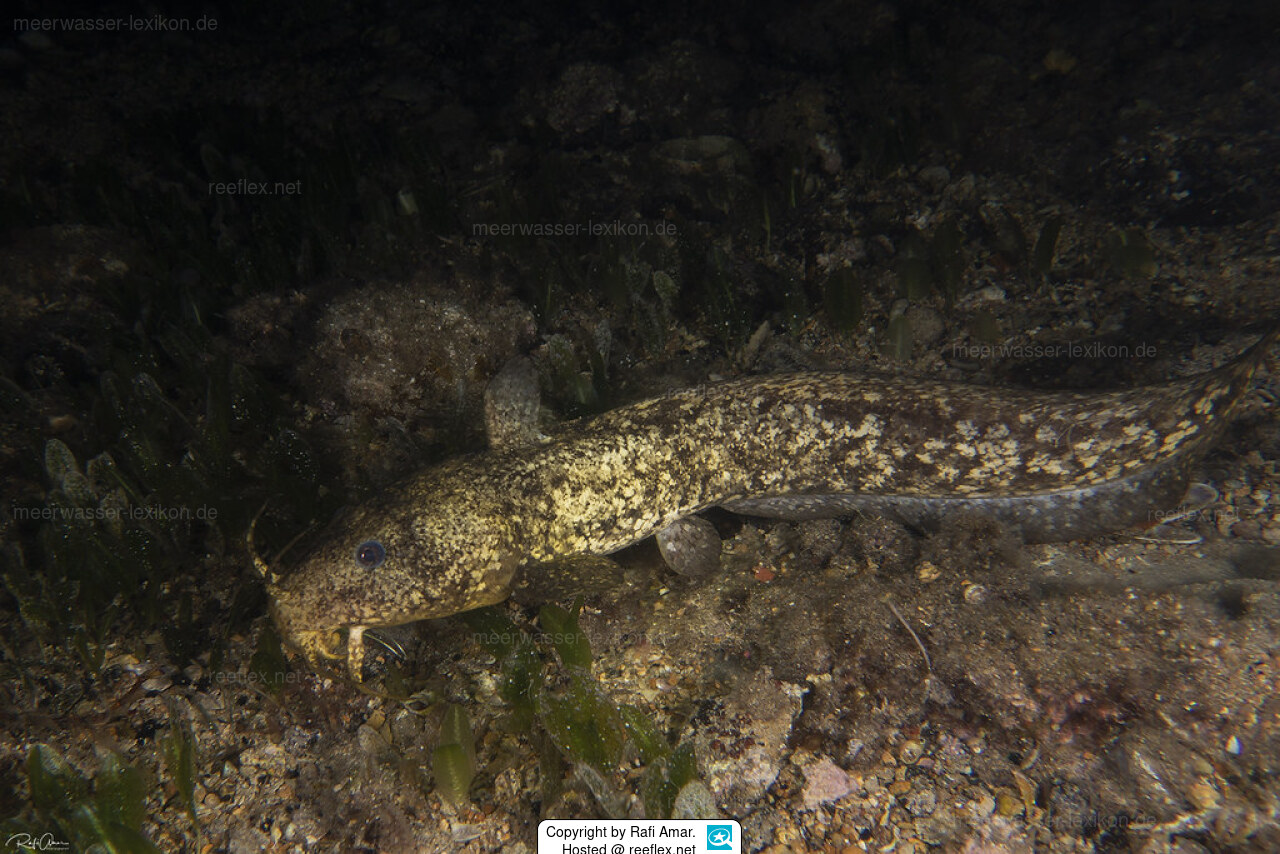
Cnidoglanis macrocephalus Cobbler, Deteira, Estuary Catfish, South Australian Catfish, Estuary cobbler, Estuarine Cat-fish

Cnidoglanis macrocephalus is commonly referred to as Cobbler, Deteira, Estuary Catfish, South Australian Catfish, Estuary cobbler, Estuarine Cat-fish. Difficulty in the aquarium: suitable for large display tanks (public aquarium or zoo) only. Toxicity: Has a poison harmful to health.


Profilbild Urheber Rafi Amar, Israel

Foto: Edithburgh, Süd-Australien


Courtesy of the author Rafi Amar, Israel . Please visit www.rafiamar.com for more information.

Uploaded by AndiV.

Image detail


Profile

lexID:
5824 
AphiaID:
280227 
Scientific:
Cnidoglanis macrocephalus 
German:
Mündungswels 
English:
Cobbler, Deteira, Estuary Catfish, South Australian Catfish, Estuary Cobbler, Estuarine Cat-fish 
Category:
Maller 
Family tree:
Animalia (Kingdom) > Chordata (Phylum) > Actinopterygii (Class) > Siluriformes (Order) > Plotosidae (Family) > Cnidoglanis (Genus) > macrocephalus (Species) 
Initial determination:
(Valenciennes, ), 1840 
Occurrence:
Australia, Bass Strait, Endemic species, Houtman Abrolhos (Abrolhos Islands), Lord Howe Island, Queensland (Australia), Tasmania (Australia) 
Marine Zone:
Subtidal, sublittoral, infralittoral, deep zone of the oceans from the lower limit of the intertidal zone (intertidal) to the shelf edge at about 200 m water depth. neritic. 
Sea depth:
1 - 30 Meter 
Habitats:
Algae zones, Brackish water, Coastal waters, Coral reefs, Estuaries (river mouths), Rocky outcrops, Rock ledges, Rocky, hard seabeds, Sandy sea floors, Seawater, Sea water, Underwater caves, Underwater caverns 
Size:
23.62" - 35.83" (60cm - 91cm) 
Weight:
2.5 kg 
Temperature:
16,8 °F - 22,3 °F (16,8°C - 22,3°C) 
Food:
Algae (Algivore), Amphipods, Aquatic plant, Carrion, Clams, Crabs, Crustaceans, Detritus, Edible crab, Kelp, Predatory, Schrimps, Snails, Worms, Zoobenthos 
Difficulty:
suitable for large display tanks (public aquarium or zoo) only 
Offspring:
Not available as offspring 
Toxicity:
Has a poison harmful to health 
CITES:
Not evaluated 
Red List:
Data deficient (DD) 
Related species at
Catalog of Life
:
 
Author:
Publisher:
Meerwasser-Lexikon.de
Created:
Last edit:
2025-10-31 20:05:06 

Toxicity

This is a general hint!
Cnidoglanis macrocephalus has a harmful toxin.
As a rule, animals with a harmful poison do not pose mortal danger in normal Aquarieaner everyday life. Read the following husbandry information and comments from aquarists who already keep Cnidoglanis macrocephalus in their aquarium to get a better picture about the possible danger. However, please be careful when using Cnidoglanis macrocephalus. Every human reacts differently to poisons.
If you suspect that you have come into contact with the poison, please contact your doctor or the poison emergency call.
The phone number of the poison emergency call can be found here:
[overview_and_url_DE]
Overview Europe: European Association of Poisons Centres and Clinical Toxicologists

Info

Cnidoglanis macrocephalus (Valenciennes, 1840)

Synonymised names
Choeroplotosus decemfilis Kner, 1867 · unaccepted
Choeroplotosus limbatus Kner, 1866 · unaccepted
Cnidoglanis bostockii Castelnau, 1873 · unaccepted
Neoplotosus waterhousii Castelnau, 1875 · unaccepted
Ostophycephalus duriceps Ogilby, 1899 · unaccepted
Plotosus macrocephalus Valenciennes, 1840 · unaccepted
Plotosus megastomus Richardson, 1845 · unaccepted

External links

  1. Australian Museum (en). Abgerufen am 31.10.2025.
  2. fishbase (en). Abgerufen am 31.10.2025.
  3. Fishes of Australia (en). Abgerufen am 07.08.2020.
  4. wikipedia (en). Abgerufen am 31.10.2025.
  5. youtube (en). Abgerufen am 31.10.2025.

Pictures

Commonly


Husbandry know-how of owners

0 husbandary tips from our users available
Show all and discuss